
Last January at the Consumer Electronics Show (CES) I was pulled into a booth and offered a free DNA test with a few quick swabs inside my cheek. The complimentary test I received is called Orig3n Explorer 3 and tested language learning ability, sugar induced aging and adapt muscle force/appetite. This company claims their test results deliver actionable insights to you to help live a healthier and happier lifestyle.
My original sample apparently didn’t have enough cells, but it took the company months to determine that. They sent me a new swab kit that I mailed back and finally in October I received the results, which I found interesting and helpful:
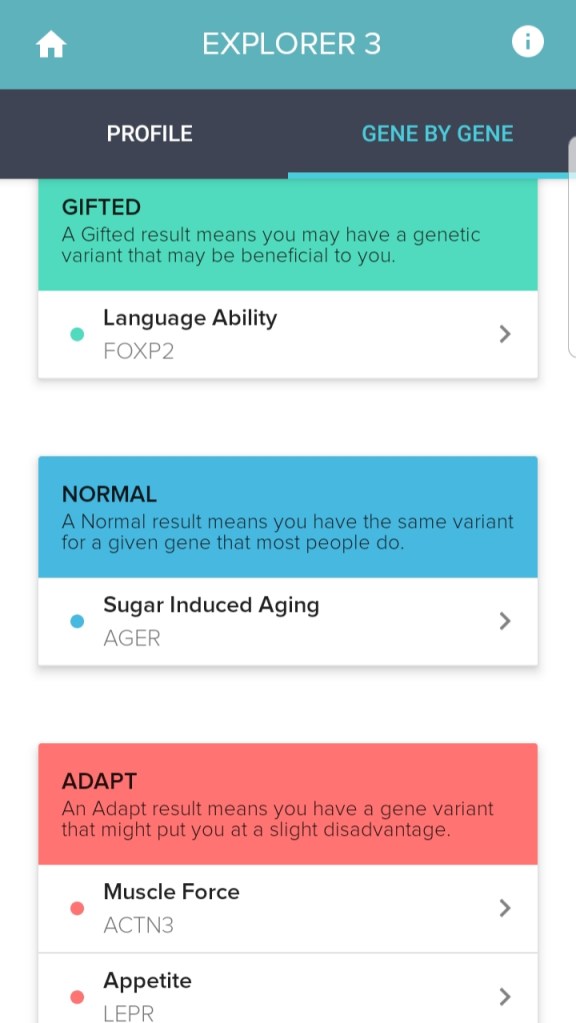
1) I am naturally gifted with learning other languages.
a) I thought this was quite ironic since I sadly only speak one language since my parents purposefully chose not to teach me to speak any Filipino dialects in fear of racism. That being said, I can see this can be true because when I took Spanish in high school and went to Cancun after graduation, I was actually able to have decent dialog with the locals. Over 20 years later, when I went to Spain I actually remembered enough to understand a taxi driver telling me where to go to grab the correct taxi that would go to the port, which was surprising since I haven’t really used it in decades!
2) I fall in the normal range for skin aging when consuming sugar, which means if I consume normal levels of sugar, the glycation process won’t have a big negative impact on the aging of my skin compared to those outside the normal range.
a) I would imagine most Asians have the same normal result here since youthful appearance is generally in our favor, but I sure am thankful for these genes! Of course healthy diet and lifestyle choices always play a big part in slowing the visible aging effects.
3) My muscles are not good at quick movements that require bursts of energy and it is much more difficult to gain muscle mass than the average person. I am also much more susceptible to obesity due to slow metabolism. Lastly I have a larger appetite than normal. (Read to the end of this post to see the detailed actionable insights my results provided me.)
a) Ain’t this some sheit! Most people looking at me would argue my susceptibility to obesity due to slow metabolism, but my doctor has told me otherwise when I was at my highest weight at 135 lbs, that I’m considered overweight and at risk of quickly becoming obese. At that weight I was already diagnosed with high cholesterol and blood pressure and pre-diabetes, all things that overweight/obese people often struggle with. My doctor told me my ideal healthy weight is between 115-120 lbs, which I am struggling to get myself down to. This test also confirmed what I already suspected, that I have to work a lot harder than others to gain muscle and that my appetite seems harder to satisfy compared to others because I seemed to eat more than others to feel not hungry/satisfied/full.
This company has other tests that are available:
- ALDH2 Deficiency $29: provides insight into whether your body may have a greater or lesser ability to break down acetaldehyde, which is a byproduct of alcohol that’s also found in coffee, tea, and air pollution.
- Beauty $99: helps to explain how your skin and hair may look, feel, and react to various conditions. Get the details you need to perfect your beauty routine and select products that best meet your needs:
- Behavior $79: offers a deeper look into the role your DNA may play in how you think, feel, act, and react. If you’ve ever wondered about the links between your personality and your genes, this is for you.
- Caffeine Tolerance $29 (subset of Nutrition): looks at your body’s sensitivity to caffeine.
- Child Development $99: From fitness to natural abilities for language and learning, the results help you get to know your child even better.
- Fitness $149: helps you understand how your DNA may affect your fitness potential, so you can get the info you need to fine-tune your routine and reach your goals faster.
- Hair $39 (subset of Beauty): how your genes could impact your hair.
- Hunger and Weight $49 (subset of Nutrition): looks at genes associated with metabolic rate, appetite, and sugar cravings — all potential determinants of weight gain or loss
- Joint Care $39 (subset of Fitness): how well your tendons, ligaments, and cartilage may handle the stress from exercise.
- Lactose Intolerance $29 (subset of Nutrition): provides insights into how well your body may — or may not — digest lactose, a sugar found in milk and other dairy products. A person’s ability to digest lactose may decline with age.
- Metabolism $49 (subset of Fitness): provides insights into how your body may store and process fat.
- Nutrition $149: provides insights into the ways your DNA may have an impact on how your body responds to food and nutrients. Discover which foods may be beneficial, what you should potentially avoid, and what might make you feel better.
- Recovery and Renewal $49 (subset of Fitness and Beauty): how well you may be able to bounce back after exercise.
- Run $99: helps you understand how your DNA could affect your running performance, development, and recovery — so you can fine-tune your training regimen and reach your goals faster.
- Skin Aging $49 (subset of Beauty): reveals your skin’s genetic predisposition toward aging.
- Skin Health and Appearance $49 (subset of Beauty): reveals how your genes could impact the way you look.
- Superhero $29: reveals your unique superhero traits. From rare, above-average intelligence to physical prowess, this fun DNA test lets you tap into your hidden superpower.
- U.S. Ski and Snowboard $149: gives you insights into attributes that can affect your performance on the slopes — so you can tailor your training to reach your full potential.
- Vitamins (subset of Nutrition) $49: examines the influence your genes may have on how well you process and absorb vitamins and minerals from food.
If you want to dive deeper into my DNA test, here are my detailed results:
1) Gifted (GG) Language Ability (FOXP2): Wow – you’re quite a superlearner! Your GIFTED result is very rare and only 15% of the population fall under gifted result for being better at learning new language. Looks like your superpower is mastering languages.
People like you are likely to be better at learning new languages because you’re more likely to display the learning strategies necessary for grasping foreign speech and text. Your gene result makes you more likely to be able to take the facts and concepts you learn and turn them into action so you can speak a new language faster. Random fun fact (pulled straight from my results report): Someone who is advanced at learning multiple languages is known as a hyperpolyglot.
Below are some tips that may help you improve your language abilities:
Conversation: Basic human nature tells us we’re always going to be more interested in speaking to a live person in front of us than we are reading a book or listening to audio lessons online. Practice conversing in your new language by regularly speaking with someone who is at a higher skill level than you (whether it be native speakers or fellow learners).
Start with the most common words: Some classes or study materials may have you learning very specific units that aren’t as useful in natural conversation. If you’re looking to be able to speak and understand the language faster, start by learning the most common words — aim to learn the first 100 most frequently used words, and then expand your knowledge from there.
Read, watch, and listen: Read magazines, newspapers, and articles and watch TV or movies that are in your target language to increase your familiarity of sounds and pronunciation. Listening to songs can help too!
The FOXP2 gene is believed to be fundamental in your unique ability to produce and understand speech and language. Research studies have found that certain FOXP2 gene results are associated with an improved ability to learn foreign speech. People with certain results are more likely to be able to switch from a declarative learning strategy (knowing facts and concepts) to a procedural strategy (skills or actions that you’re capable of performing) faster, which is ideal for understanding and speaking foreign languages. This gene is actually the only gene to date that researchers have firmly linked to language and speech development.
2) Normal (AA) Sugar Induced Aging (AGER): Your NORMAL sugar-induced aging result means that you’re in the company of 65% of the population who have the same genetic result. You are likely to have average susceptibility to skin damage through glycation.
When you eat, your body naturally breaks down the carbohydrates into sugars like glucose and fructose, which your body then uses to power everything you do. Sometimes though, especially as we age, if we consume too many sugary or high-glycemic foods, the excess sugar sticks to the skin’s collagen and elastin fibers, causing them to become very rigid. This is called glycation.
Your results mean that if you consume relatively normal levels of sugar, the glycation process that gradually occurs as natural aging takes place isn’t really a big deal. But healthy diet and lifestyle choices can slow the visible effects on your skin.
Products and foods to consider:
• Retinoid-containing serums and some dermal fillers that stimulate new collagen building.
• Hyaluronic acid-containing topical treatments.
• Anti-glycation serums and topical solutions.
• Low-glycemic foods such as nuts and seeds, lean meats, salmon, eggs, vegetables, healthy grains like barley, quinoa and rolled oats, and fruits such as berries, plums, peaches and cantaloupe.
• Antioxidant-containing foods like blueberries and pomegranates, as well as dark chocolate (in moderation!) and green tea.
• Vitamin B supplements, especially B1, B6, and B7. These vitamins help stop the formation of AGEs.
• Carnosine supplements.
• Seasonings such as cinnamon, cloves, ginger, garlic, oregano, and allspice.
Consider consulting an in-store beauty adviser for products appropriate for your results or a licensed aesthetician or dermatologist for recommendations on any appropriate course of action. Before making any dietary changes, you may wish to speak with a registered dietitian nutritionist.
Your skin is affected by what you eat. With certain AGER gene results, your skin may show signs of aging sooner if you have too much sugar in your diet. The sugar may not fully metabolize, which can cause glucose to bind to your skin’s collagen and elastin fibers, forming abnormal chemical bridges that may cause tissue damage. This process is called glycation, and it causes skin aging. Glycation also impairs your skin’s ability to regenerate, which leads to skin looseness, cracking, thinning, redness and inability to self-repair. The gene AGER encodes the receptor protein Advanced Glycosylation End-Product Specific Receptor. This receptor binds glycans which results in pro-inflammatory gene activation. Your AGER result can influence the receptor levels in your skin cells which can influence how well your skin ages.
3) Adapt (TT) Muscle Force (ACTN3): 10% of the population. You have fast-twitch muscle fibers (which are responsible for quick movements such as punches, jumps, or sudden bursts of energy), and therefore a lower ability to absorb and transmit muscle force during rapid muscle contraction.
People like you may not be as inherently good at sports that require quick sudden bursts of energy and it may be more difficult for you to gain muscle mass. This result doesn’t mean you shouldn’t take up certain sports, like sprinting or boxing — you may just need additional training to excel at this type of activity.
To help build your strength, consider the following activities and tips:
• Weight lifting that focuses on lower repetitions of heavier weights (the optimal rep range for building muscle mass is 8-12 reps)
• Incorporate more protein into your diet (such as eggs, protein powder, lean meat, nut butters, fish)
• Try low-impact, strength building activities like yoga or Pilates
ACTN3 is the most studied fitness gene. This gene provides instructions for your body to make a specific muscle protein that impacts the ability of your skeletal muscles to produce force at a high velocity. (Skeletal muscles are those that are often connected to bones with tendons, such as biceps, triceps, and flexors.) This muscle protein, called alpha actinin-3, is crucial for success in sports requiring power and short bursts of speed (sprinting). The analysis of ACTN3 gene results determine if you’re more likely to have enhanced performance in power and sprint activities or if your performance is considered normal.
Adapt (TT) Appetite (LEPR): 15% of the population. With this result, you’re at higher risk of obesity as you’re more likely to have a slow metabolism. People like you may have a larger appetite and your metabolism may burn calories slower. That said, your genes are only a piece of the puzzle when it comes to your weight!
You can increase your metabolism rate by:
• Drinking more water over sugary drinks
• Eating more foods rich in protein
• Exercising more often or taking part in HIIT (high-intensity interval training)
• Lifting weights regularly
• Avoiding sitting for long periods of time. Take frequent walks or breaks if you often sit at a desk to get in more exercise.
• Getting enough Zzz’s. (Lack of sleep is linked to an increase in obesity risk)
It may also help to monitor your food intake closely and exercise regularly. If you struggle with maintaining a healthy weight, you may need a registered dietitian nutritionist to make a structured meal plan as guidance for meal size and frequency based on your personal needs and goals due to your increased risk of weight gain.
Consider working with a registered dietitian nutritionist or a certified personal trainer and consult your physician before undertaking any new diet or exercise programs.
Your LEPR gene result reveals your genetic risk of obesity. Your metabolic rate is a major
determinant of weight gain and loss. With a higher metabolic rate, you’ll burn more calories and therefore, you’ll be more likely to have a lower average weight. With a lower metabolic rate, you are more likely to gain weight as you won’t burn as many calories as someone with a faster metabolism. The LEPR gene gives insight into whether you likely have a fast or slow metabolism.

 GGibberish