

I first learned to cook adobo with a simple recipe that was easy to adjust no matter the amount of meat or vegetables I was cooking: 1 part vinegar, 2 parts soy sauce, 3 parts water, garlic, bay leaves and black pepper.
You are probably questioning, like I did when I first heard this recipe, “But how much garlic, bay leaves and black pepper is that exactly?” I don’t recall what I was told but it was something like, several pieces of garlic, a few bay leaves and pepper according to taste preferences. Being OCD, these kind of responses drive me crazy because I want to know precise measurements, even taking it so far as to question: If the bay leaf is big, equating to the size of two smaller bay leaves, does that count as 1 or 2 leaves?
After cooking this recipe for decades and modifying it many different ways, I have come to my own version of adobo that I cook in an Instant Pot rather than a regular stovetop. It is easier to throw everything into a pot and walk away to do other things while it cooks. Since I prefer a stronger flavor with a hint of spiciness, I eliminate the water from the recipe and use a spiced vinegar in equal amount to the soy sauce. Here is my recipe using chicken drumsticks for 2 servings, which is 2 drumsticks per person. This is my favorite meat to use for adobo:
Ingredients
- 4 chicken drumsticks (weight is ~1.5 lbs depending on the size of the drumsticks)
- 7 small cloves of garlic, crushed
- 1 T cooking oil
- 3 small dried bay leaves, rinsed
- 1/2 cup Datu Puti spiced vinegar
- 1/2 cup Silver Swan soy sauce
- Freshly ground black pepper, according to preferred taste (I use A LOT of pepper to add to the heat of the dish)

Directions
- Heat Instant Pot on Sauté setting.
- In 1 T of heated cooking oil, lightly brown garlic until fragrant.
- Add chicken, vinegar, soy sauce, bay leaves and black pepper.
- Cancel Instant Pot Sauté setting and lock lid into place with pressure valve closed.
- Set Instant Pot to Poultry setting, which defaults to High Pressure for 20 minutes.
- Natural Release if eating immediately, otherwise Instant Release if not eating it that day.
- NOTE: I prefer to make this dish the night before I plan to eat it because when it sits in the refrigerator, the seasoning infuses into the meat and is more flavorful the next day or two. I use instant release so the meat does not overcook as I will cook it more when heating it back up. If eating it right away, I use natural release so it has more time to cook because I prefer it when the meat is almost falling off the bone.


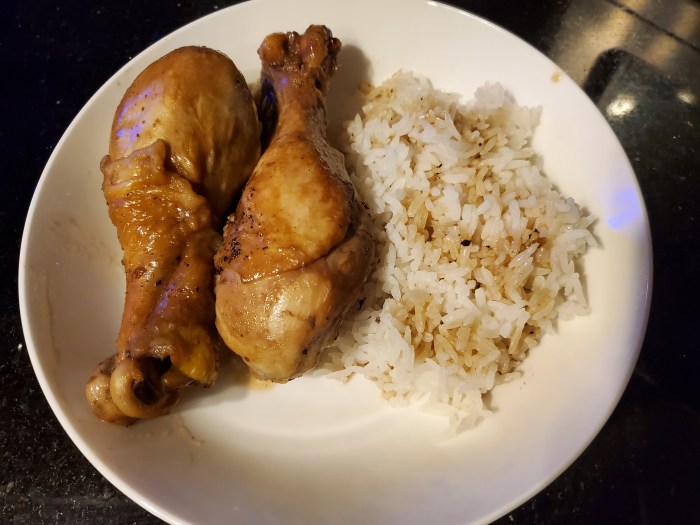
Chicken Adobo with sauce drizzled over the white jasmine rice
Notes
- Alternate Meat or Vegetable options that I personally use and make:
- Chicken – bone-in thighs or wings (I do not recommend using breast)
- Fish – Catfish
- Pork – Belly, rib tips (bone-in), or pig’s feet
- Vegetable – Kangkong (known as water spinach, water morning glory, Chinese watercress or ong choy)
- Garlic: I love garlic so tend to put a lot more than what a normal recipe would call for. Size of the cloves will also determine how many I use. For example, instead of 7 small cloves, I would use 4 large cloves.
- Bay Leaf: I will adjust the number of leaves according to the size of the leaf. For example, instead of 3 small leaves, I would use one large leaf that I break into 3 smaller pieces that would equate to the size of a small leaf. The leaves should be removed prior to serving since they should not be eaten.
- Vinegar: Plain white vinegar and apple cider vinegar may be used, but there will be a difference in taste. The non-spicy native vinegar that is often used for this dish is dark brown in color and called “Sukang Iloco (Sugarcane Juice Vinegar) and I prefer the Datu Puti brand.
- Soy Sauce: Silver Swan is a dark soy sauce. If using a light soy sauce, I recommend doubling the amount so it is 2 parts soy sauce to 1 part vinegar.
- Pepper: In addition to black pepper, I sometimes add whole hot peppers from the spiced vinegar, which contains bits of onion, garlic and hot peppers. Fresh peppers may also be used.
- Sauce: Adobo can be made dry or with a lot of sauce. My preference is to have a lot of sauce so I can drizzle it over my white rice, make adobo fried rice the next morning and/or marinate peeled hard boiled eggs in the sauce for a few days.
- Other: Onion or potato may be added in the dish.
- Cook time: The traditional way to cook adobo is to slow simmer it over a stove top. Depending on the meat or vegetable used, cook times will vary. If doing vegetable or fish adobo, I prefer to use the stovetop versus the instant pot to avoid overcooking. When using the instant pot, I google standard times based on the type of meat and use the recommended guidelines accordingly.


 GGibberish